

The PSP's Forgotten Flight Combat Gem
There are certain games that can bypass logic and go straight for your heart. For me, After Burner is one of them.
I grew up when the movie Top Gun was everywhere. I watched it constantly as a kid and became completely fascinated with fighter jets, especially the legendary Grumman F-14 Tomcat. I sometimes joked I would grow up to be a fighter pilot. Spoiler alert, I never became a pilot, but any time a video game gave me the chance to strap into a cockpit and launch into the danger zone, I was there.
So when I discovered that After Burner: Black Falcon existed on the PlayStation Portable, it felt like fate. A portable version of one of my favorite arcade experiences? Sign me up.
While I had high hopes the moment I got my hands on this game, the real question was whether this PSP exclusive could capture the same adrenaline rush that made me dump quarters into arcade cabinets years ago, or if it would simply be a case of nostalgia clouding my judgment.
After spending a good amount of time with Black Falcon, I can confidently say the answer falls somewhere in the middle.
Talk To Me, Goose: The Story Nobody Came Here For
One of the biggest surprises about After Burner: Black Falcon is that it actually has a story. Granted, "story" might be giving it a little more credit than it deserves, though.
The setup revolves around a former military pilot, callsign Forge, who steals a collection of experimental aircraft with plans to sell them to unsavory folk. It's now your job to hunt him down and recover or destroy the stolen prototypes before they fall into the wrong hands.
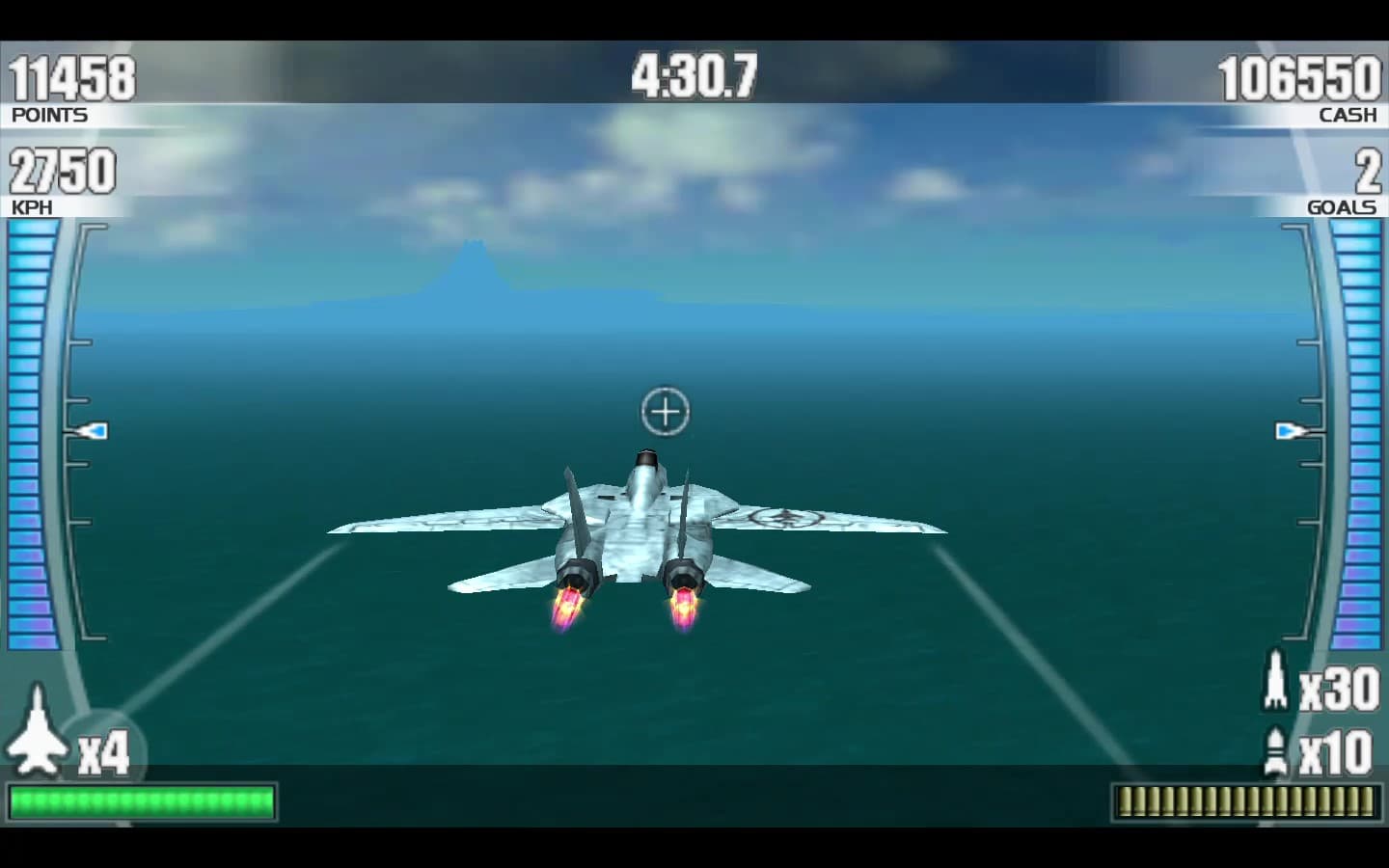
Before beginning the campaign, you choose from one of three pilots. Each has their own personality, motivations, and small collection of comic book-style cutscenes that play throughout the game.
The problem is that none of these storylines ever go anywhere particularly interesting. One pilot has a personal connection to the villain. Another is motivated purely by destroying targets for money. One apparently used to hunt vampires before becoming a fighter pilot, which honestly ended up being the most memorable piece of lore in the entire game, though I have to assume it was a joke... But who knows!
The narrative is excuse to move from one mission to the next. Thankfully, that's exactly what Black Falcon seems to understand. It knows players aren't here for dramatic storytelling. While I certainly appreciated the attempt, players are here to fly fast and blow things up. And for the most part, it feels really good doing both of those things.
I Feel the Need...
Gameplay is where After Burner: Black Falcon shines.
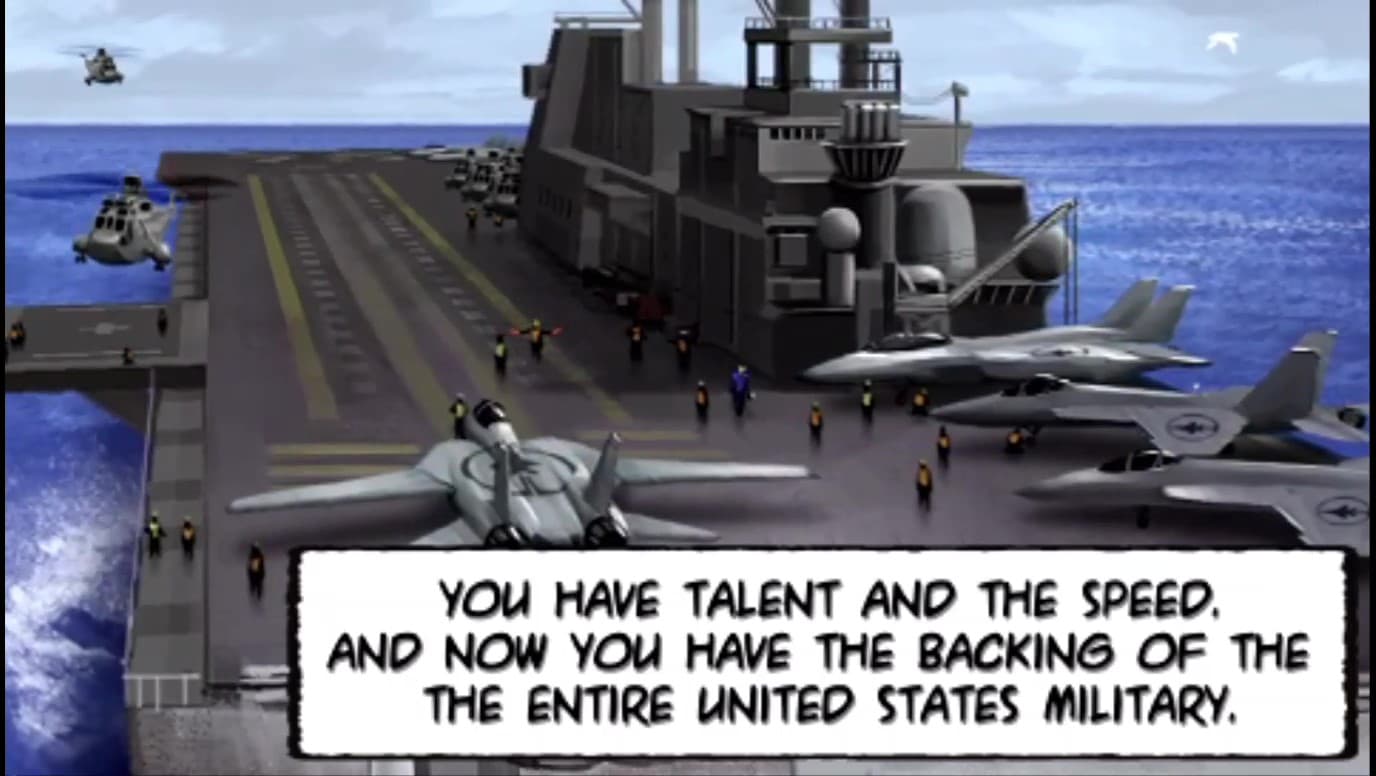
Combat is simple, accessible, and immediately satisfying. Enemy aircraft can be locked onto with missiles while ground targets are eliminated with bombs. Meanwhile, you're weaving through incoming fire, performing barrel rolls, adjusting your speed, and desperately trying not to become a target yourself. It's an arcade game through and through.
The beauty in it all lies in how quickly the gameplay clicks. Within minutes, you'll be locking onto multiple enemies, firing off missile salvos, collecting power-ups, and pulling off evasive maneuvers like you've been doing it for years.
The combat loop becomes surprisingly addictive as you go, too. Destroy enemies. Collect money. Upgrade your aircraft. Unlock better aircraft. Repeat. It's straightforward, but it works. The progression system constantly gives you something to work toward, whether that's stronger weapons, larger missile payloads, or finally unlocking that one aircraft you've been eyeing since the beginning.
Few things feel better than taking a fighter jet that struggled through early missions and gradually transforming it into an airborne monster, and it makes your growth throughout the game noticeable in all the right ways.
The Jets Are the Real Stars
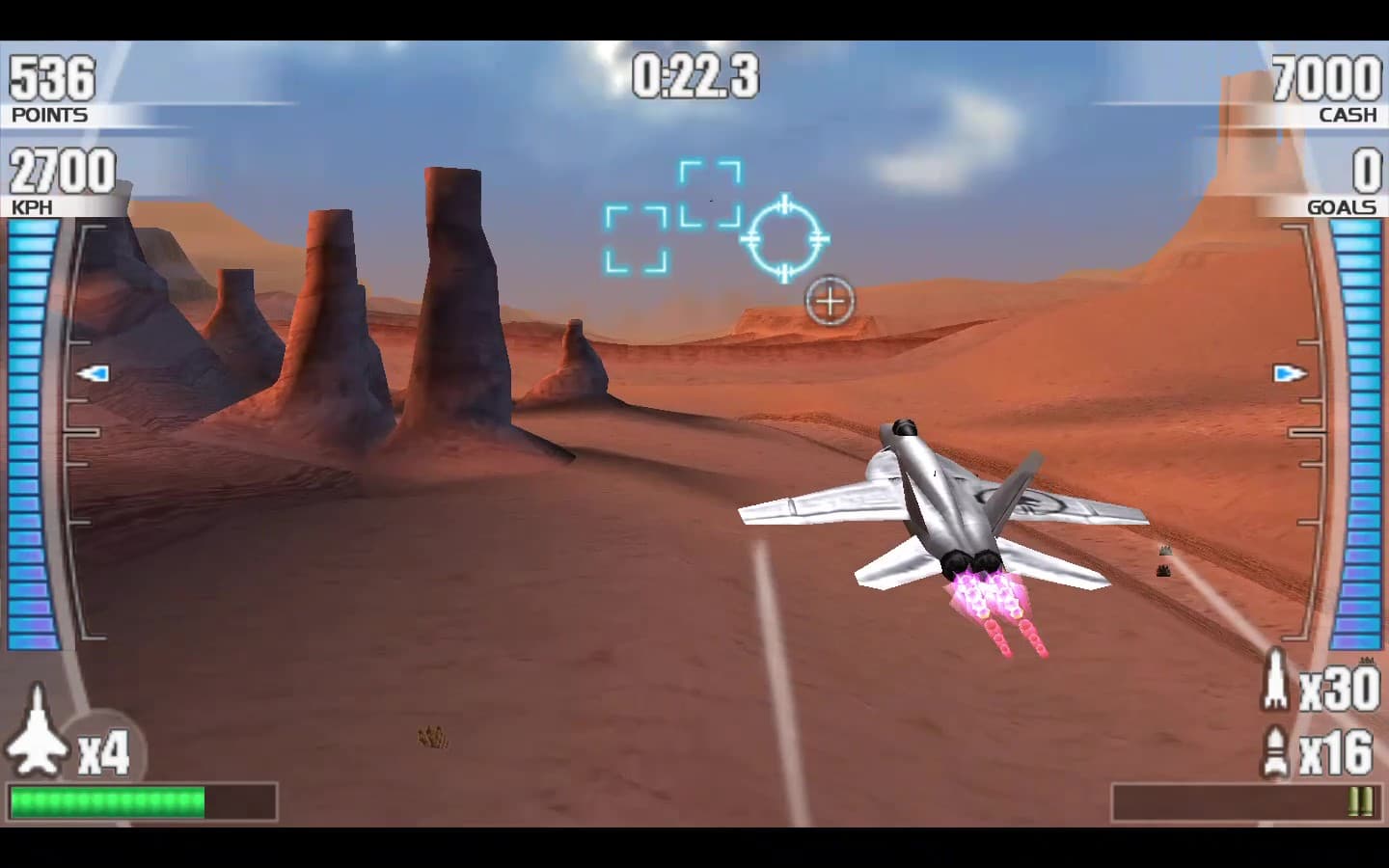
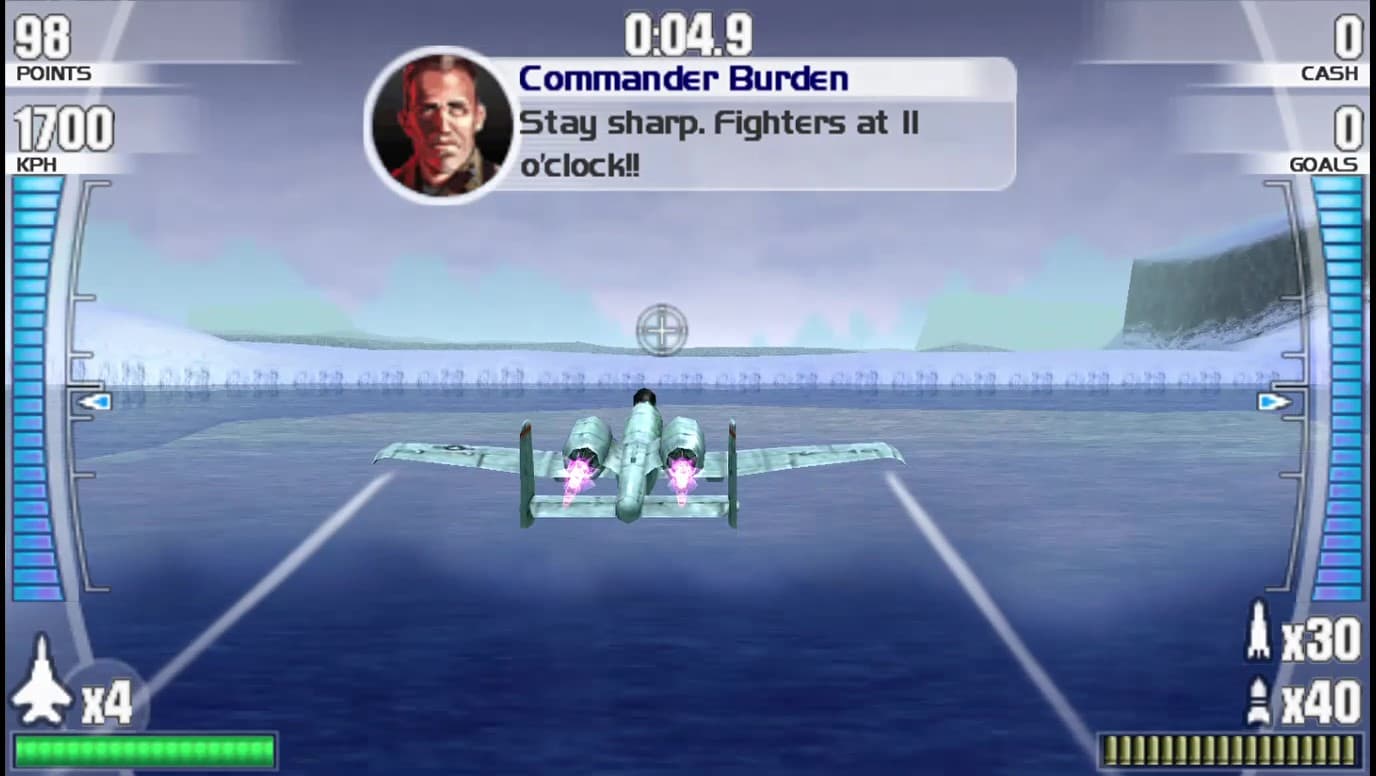
One of my favorite things about Black Falcon is the sheer variety of real-world aircraft available. Whether you're flying an F-14 Tomcat, an F-15 Strike Eagle, an A-10 Thunderbolt II, or eventually unlocking more advanced aircraft like the F-22 Raptor, every plane feels distinct, and very plane like it belongs.
The developers clearly had an appreciation for military aviation. Aircraft models are fairly detailed, recognizable, and surprisingly impressive for a PSP title released in 2007.
Little touches go a long way, too. Watching the Tomcat's wings sweep backward as the afterburners engage instantly put a smile on my face. It's a small detail, but it's exactly the sort of detail that adds to the experience.
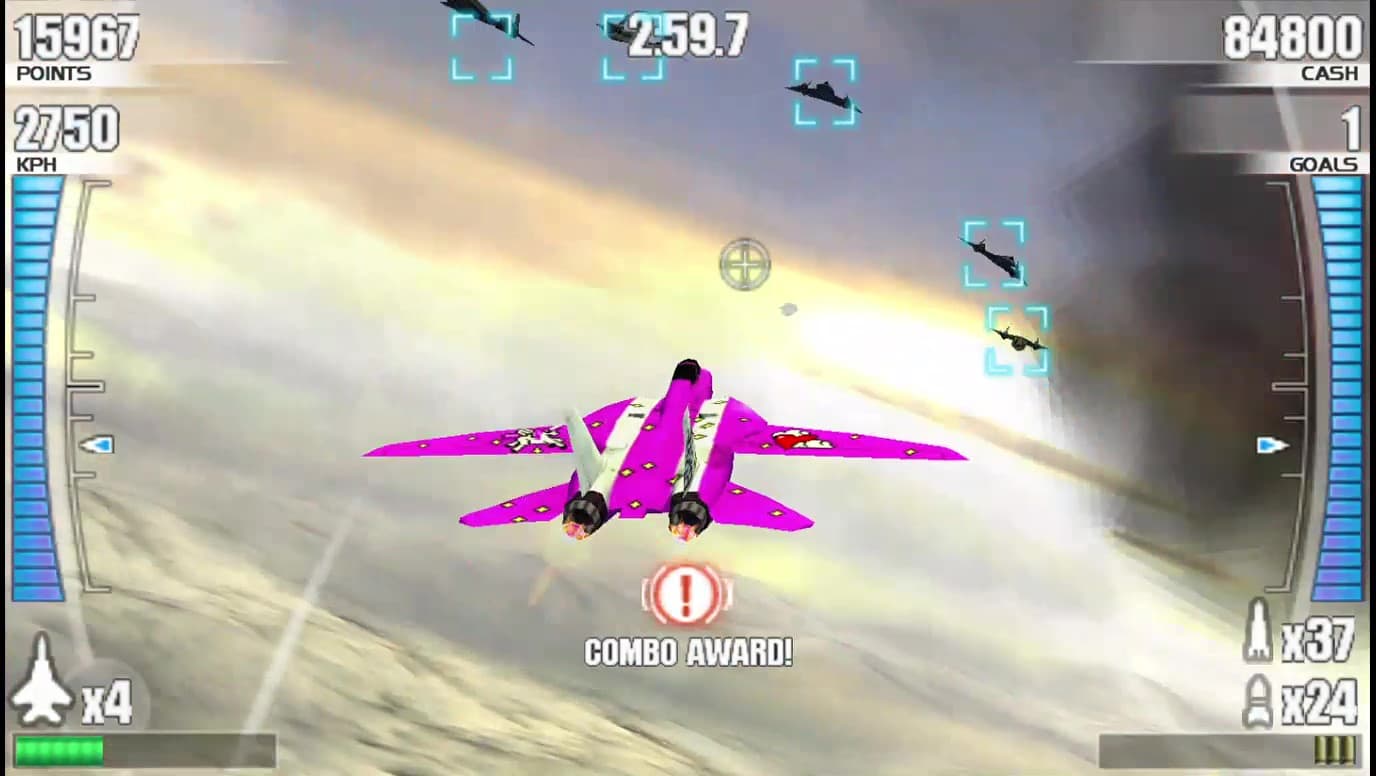
The game also lets you unlock cosmetic paint schemes for your aircraft and other random accessories. Some are realistic military camouflages while others are a bit more... let's go with "playful".
Was my bright pink F-14 with unicorn logo completely ridiculous? Absolutely. Did I fly it into combat anyway? You better believe I did. And I'll do it again, no questions asked.
You've Lost That Loving Feeling... For Variety
Now while the aircraft certainly impress, the environments don't always fare as well.
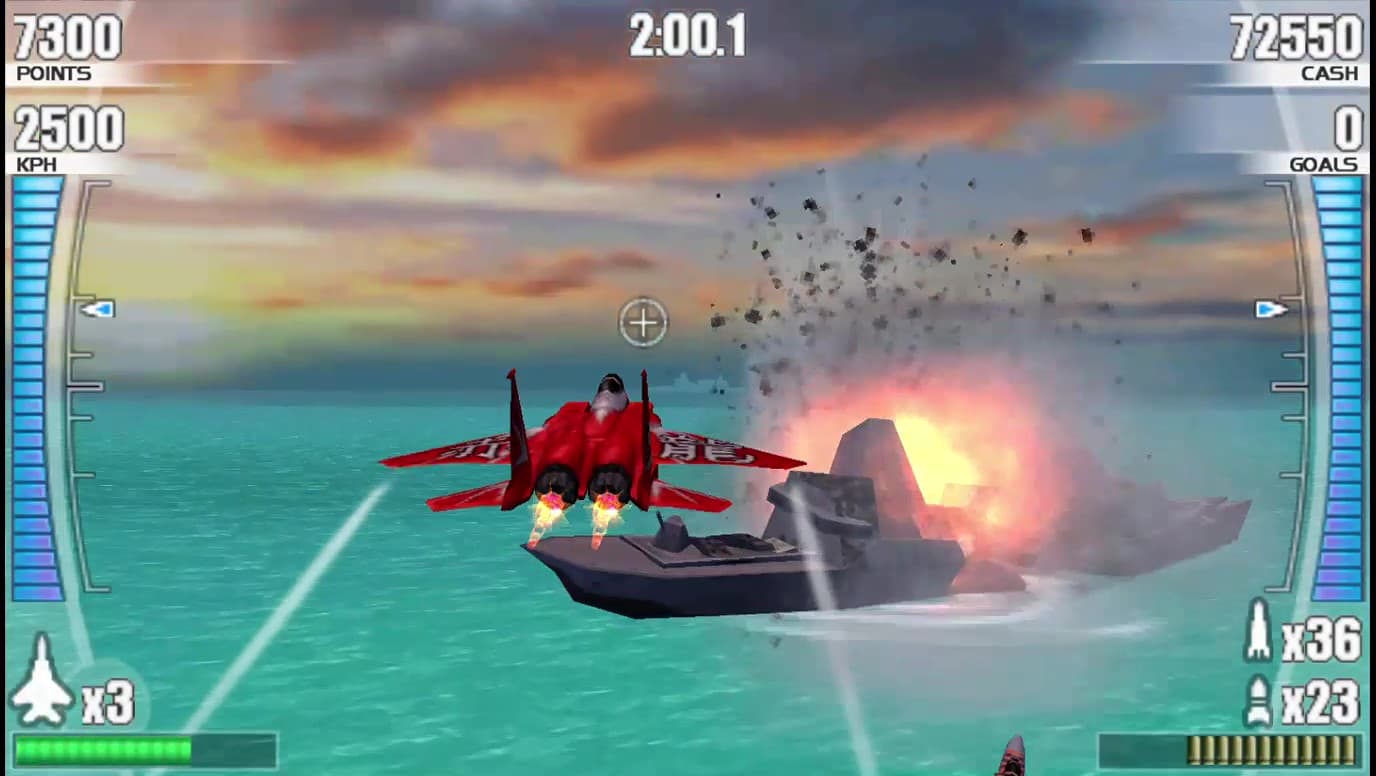
You'll fly through deserts, coastal regions, forests, oceans, and cloud-covered skies. At first glance, there's enough variety to keep things visually interesting. The problem is repetition. With over twenty missions in the campaign, locations start repeating fairly quickly. The same can be said for many of the game's cinematic moments. Flying through exploding structures and narrowly escaping collapsing environments is exciting the first few times.
By the fifth or sixth time? Not so much.
To be fair, this isn't a deal-breaker. Most of your attention is focused on enemy aircraft and incoming missiles anyway. Still, it does make the game feel smaller than it initially appears, and once you finish the main campaign and you go back to replay levels for more cash, the lack of level variety and even some lack enemy variety started to wear on me a bit.
Great Balls of Fire
While variety suffered a bit, I have to say that one thing I appreciated throughout my playthrough was that the game rarely felt unfair.
The later missions absolutely become more difficult. Enemy formations grow larger. Air and ground targets start appearing simultaneously. More powerful enemies enter the fight. But most failures felt like they were truly my fault.
Maybe I got greedy. Maybe I ignored incoming missiles. Maybe I allowed too many enemies to accumulate on screen. Whatever the reason, I almost always walked away feeling like I could improve rather than feeling like blaming the game. That's an important thing I want to call out. The challenge encourages mastery instead of frustration and if I ever was shot down, I kept getting back in the pilot seat and heading back into the fight.
By the time I reached the later stages, I was paying closer attention to positioning, timing my barrel rolls better, and making smarter decisions about which targets needed immediate attention. I found myself entering a flow state that really connected me to the experience in a way I'm sure the developers had intended. That feeling is incredibly rewarding in a way that many arcade-style games often struggle to achieve.
The Debriefing
After Burner: Black Falcon isn't perfect. The mission structure becomes repetitive. The environments recycle themselves a little too often. The upgrade grind eventually starts showing cracks. And once you've seen everything the game has to offer, there's not a huge amount of depth waiting beneath the surface.
But you know what? I still had a great time with this game.
At its best, Black Falcon captures exactly what I loved about After Burner in the first place. It delivers fast-paced aerial combat, lets me fly some of my favorite military aircraft, and gives me just enough progression to keep chasing that next upgrade.
I wouldn't recommend it to everyone, though. If you've never enjoyed rail shooters, this game probably isn't going to convert you. But if you're anything like me... if the sight of an F-14 Tomcat or other military aircraft makes you stop and stare, if arcade action or fast paced gameplay excites you, or if you've ever dreamed of going Mach 2 with your hair on fire a few minutes at a time, there's plenty of fun waiting here.
Sometimes a game doesn't need to be groundbreaking. Sometimes it just needs to give you the ability light the afterburners and let you fly.
"After Burner" from After Burner II (1987, Sega) Downloaded via Retro Tracks. All rights belong to Sega.