
Happy Mario Day, Wildlanders!
March 10th has become a fun little holiday for gamers around the world. “MAR10 Day” is a celebration of everyone's favorite mustachioed plumber who has been jumping across our screens for ages now. From rescuing Princess Peach to beating opponents on the tennis court, Mario has had no shortage of incredible adventures to his name.
Despite Mario’s legendary status, I’ll admit something that might sound strange and borderline blasphemous to longtime Nintendo fans: I missed out on a lot of Mario games growing up. I was mostly a PlayStation kid. Outside of Super Mario Bros. 3 and Super Mario World, my time in the Mushroom Kingdom was pretty limited. So when Super Mario Wonder originally released on the Nintendo Switch, it felt like the perfect opportunity to jump back in.
And after spending time with it, I can confidently say this game lives up to its name.
Welcome to the Flower Kingdom
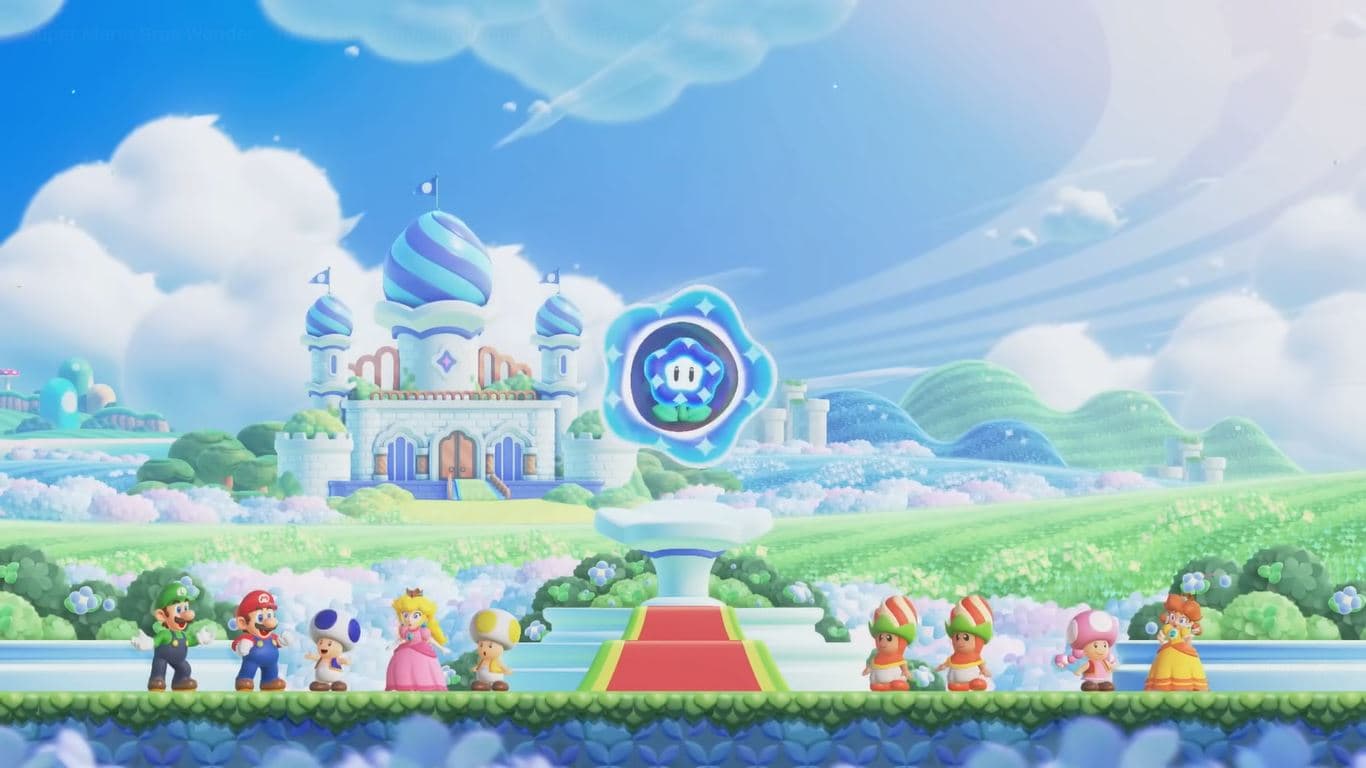
Super Mario Wonder follows a familiar Mario setup, but with a few fresh twists. This time around, Mario, Luigi, Peach, and friends are invited by Prince Florian to visit the colorful Flower Kingdom. Of course, Bowser crashes the party almost immediately because what else is he supposed to be doing? After stealing a powerful Wonder Flower, Bowser merges with the kingdom’s castle and becomes a massive, reality-warping threat known as Castle Bowser.
Your mission is simple: travel across the Flower Kingdom’s different regions, collect Wonder Seeds, and stop Bowser before his magical chaos spreads any further. It’s classic Mario storytelling and setup. It's light, colorful, and mostly just an excuse to send you running, jumping, and bouncing through imaginative levels. But honestly, that’s all it really needs to be. At the end of the day, the name of the game is "Wonder" for a good reason.
Looking Forward to the Unexpected
The defining feature of Super Mario Wonder is, unsurprisingly, the Wonder Flower mechanic.
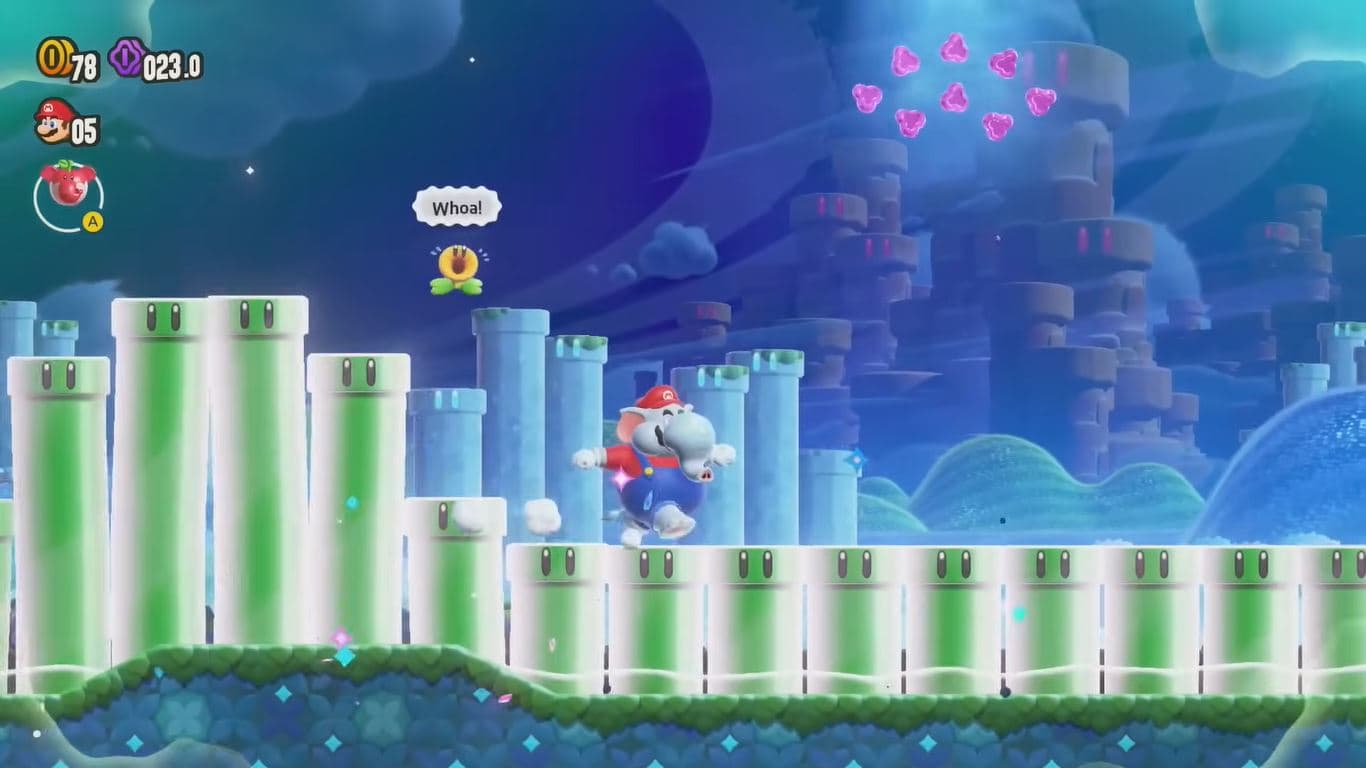
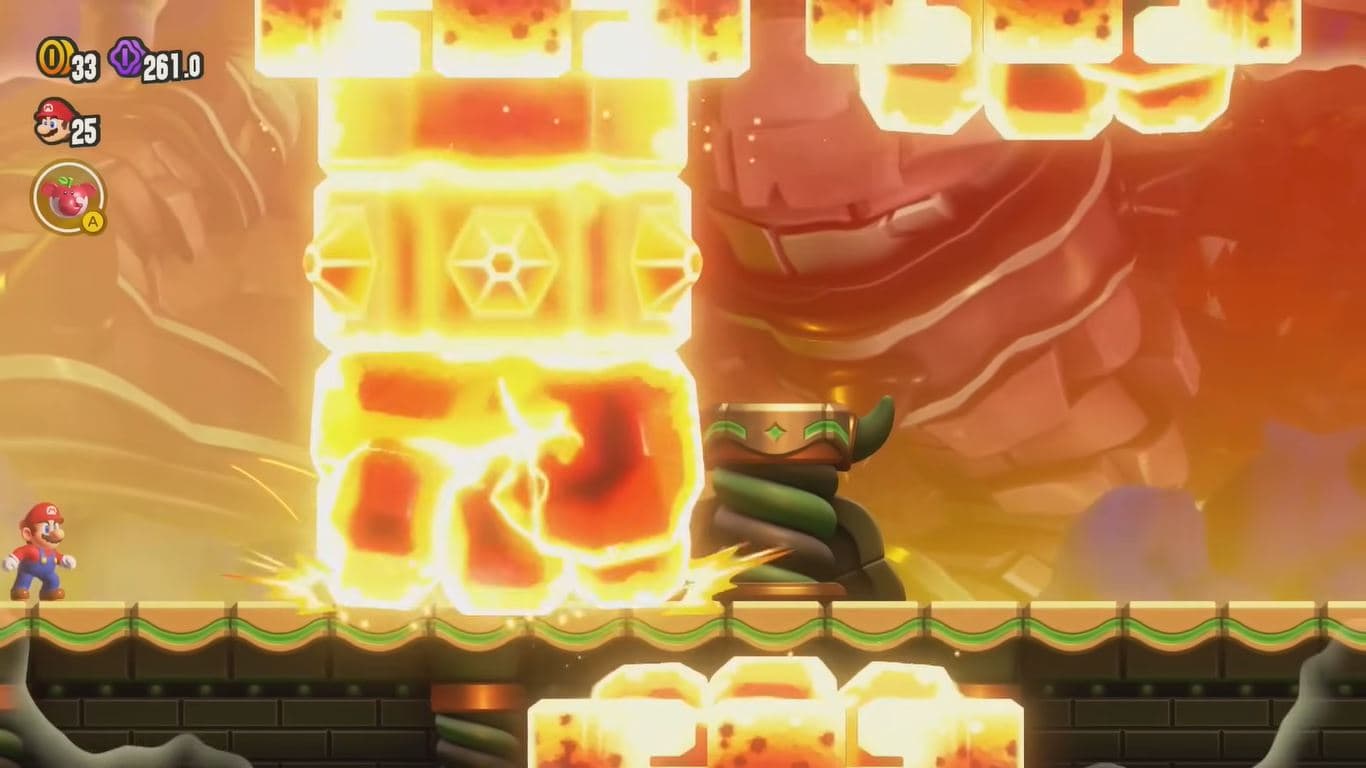
Hidden within most stages is a magical Wonder Flower that, when activated, completely transforms the level in some unexpected way. Pipes might suddenly start slithering around like snakes. The ground might begin to sing and dance. Gravity might shift in bizarre directions. At one point, I was in a state where the whole area became one big musical number starring a chorus of Piranha Plants.
Every time I found one of these flowers, I had the same thought: “What is about to happen?” And that sense of surprise is where the game truly shines.
The word “Wonder” was the perfect choice for the title, because nearly every level had me feeling exactly that, a sense of awe and curiosity about what strange gimmick might show up next. As soon as I'd grab a Wonder Flower, I almost always had a small smile on my face as I watched the world transform and a new game mechanic was presented to me. Nintendo packed an incredible amount of creativity into these stages, and most ideas appear just long enough to be memorable before the game moves on to the next surprise. It keeps the experience constantly fresh.
Platforming That Feels Just Right
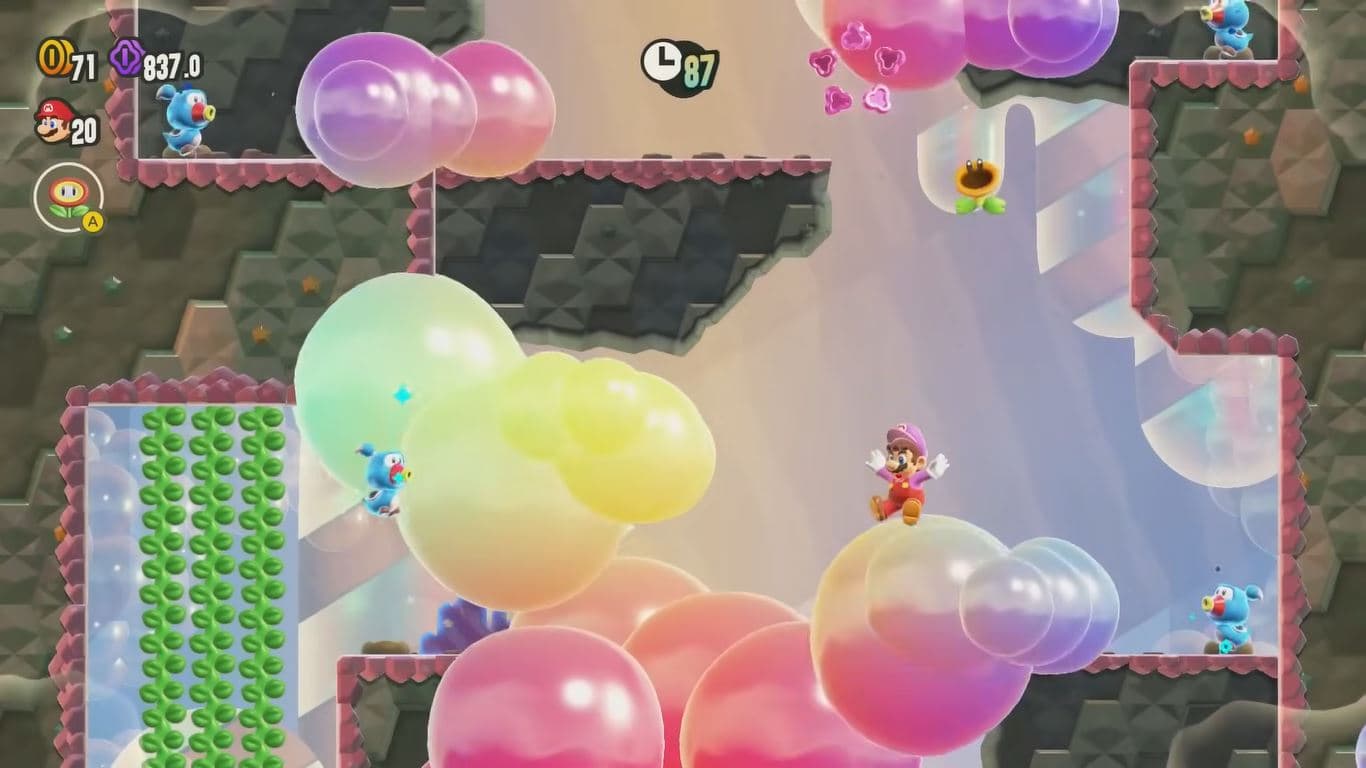
At its core, Super Mario Wonder is still a classic 2D Mario platformer, and thankfully the fundamentals are rock solid. The controls are buttery smooth, which is exactly what you want in a precision platforming game. Running, jumping, and bouncing across enemies all feel responsive and natural.
While the game starts out fairly approachable, things definitely ramp up later on. Some of the later levels (and especially the optional challenge stages) can get pretty tough. But even when things got tricky, I never felt like success was out of reach. Instead, the difficulty felt encouraging rather than punishing and I always felt compelled to keep trying. It was hard to quit such a tight experience.
Badge Up!
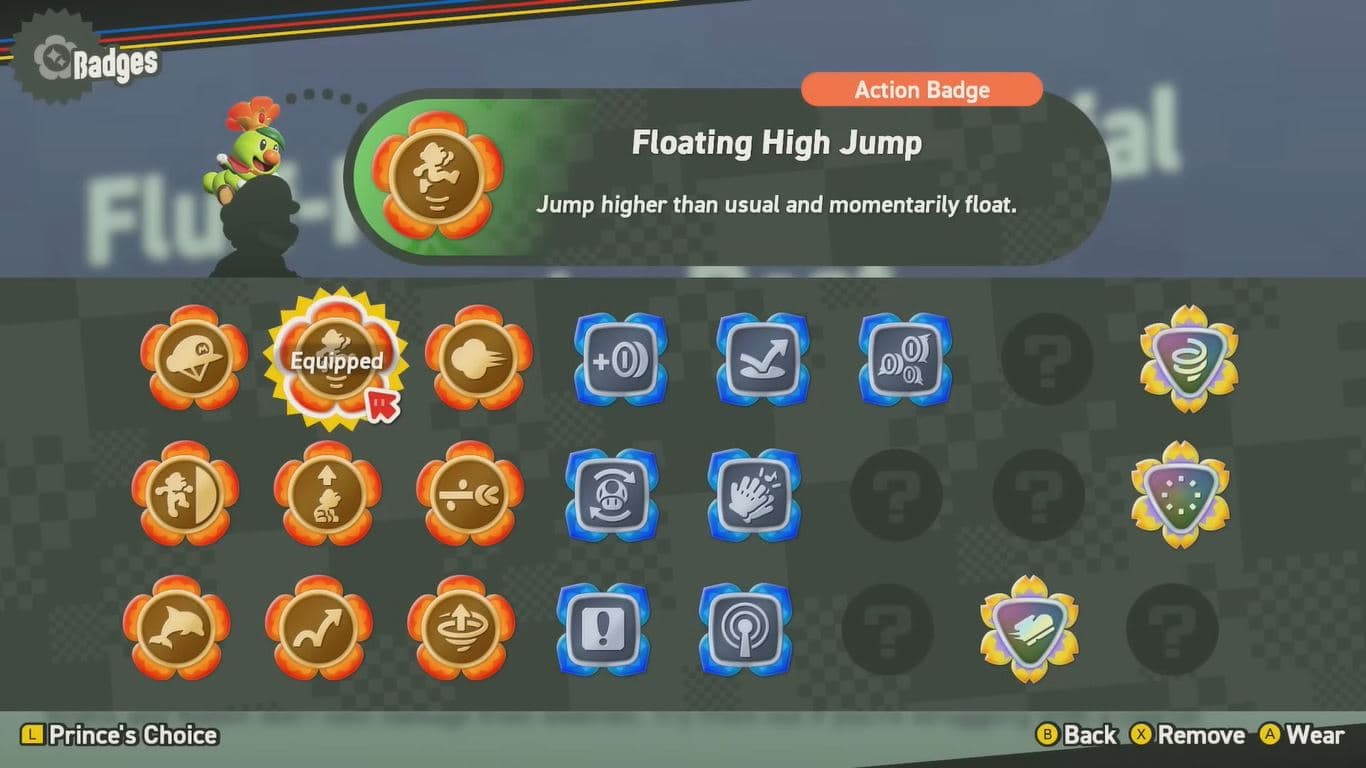
One of the game’s coolest additions is the Badge system. Badges grant Mario and friends different abilities or perks that can completely change how you approach a level. Some allow for higher jumps, others add a safety bounce if you fall into a pit, and some introduce entirely new movement mechanics.
I really liked this system because it gave me flexibility. If a stage was giving me trouble, I could switch badges and try a different strategy. It also gave levels some replay value when I went back hunting for additional Wonder Seeds. It’s a simple mechanic, but it adds a lot of personality and customization to the experience. Earning badges felt exactly that, earned, and when I used them to their fullest potential, there was hardly anything that stood in my way when I put my thinkin' meat to use!
A Mushroom Kingdom That Feels Alive
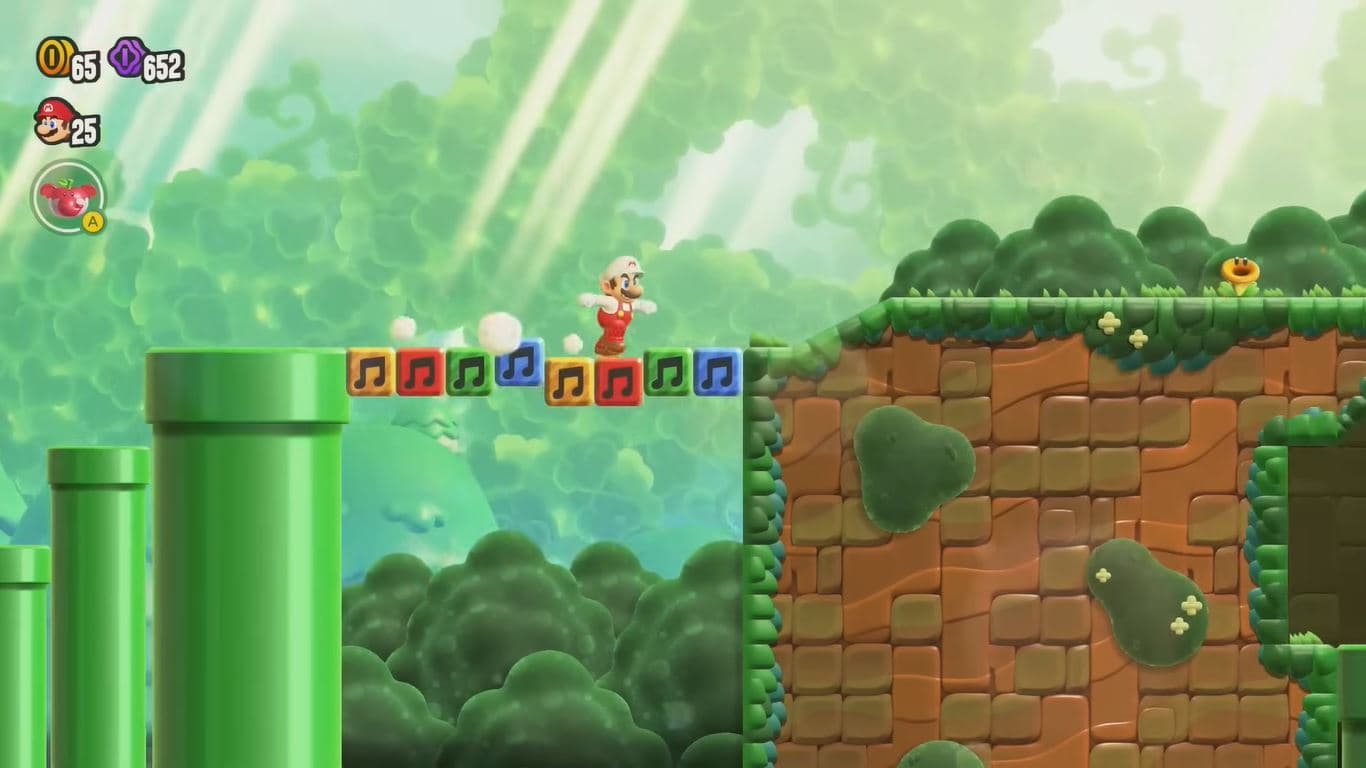
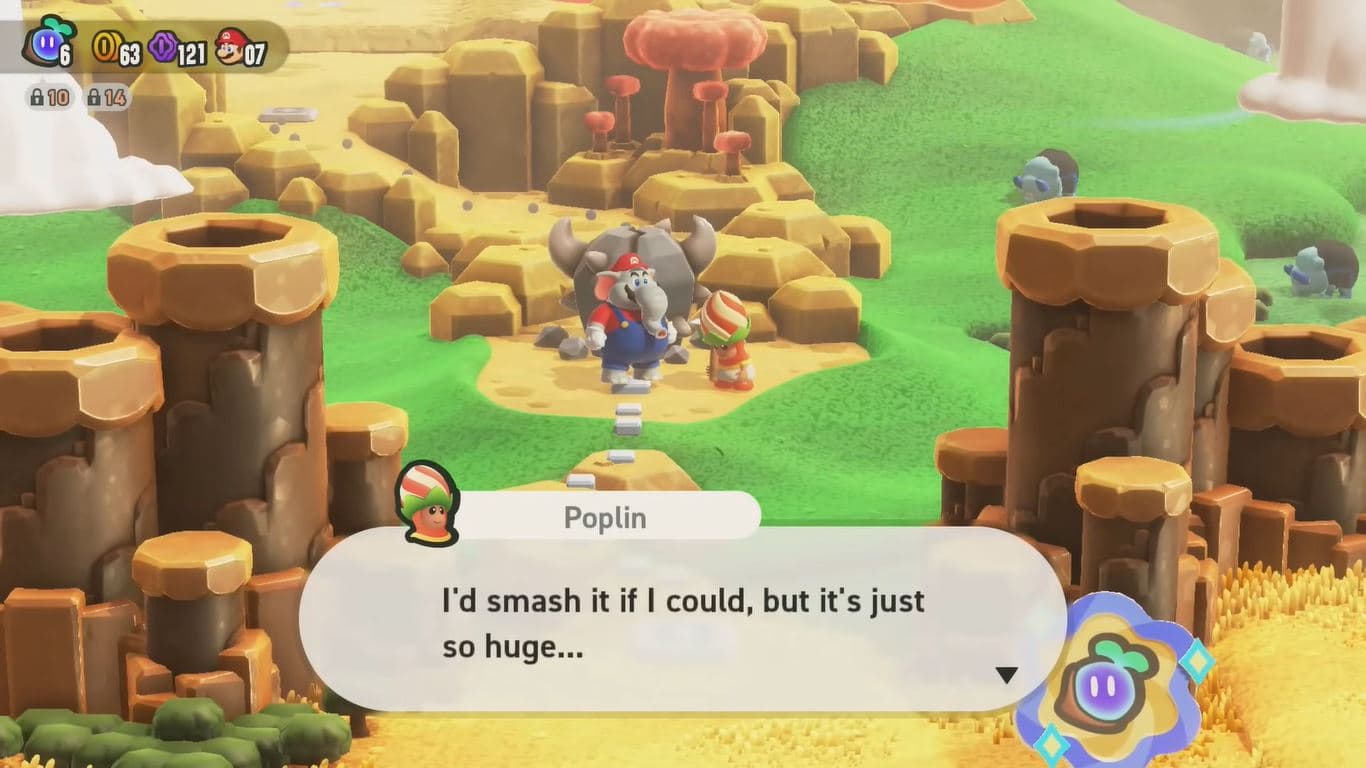
Visually, Super Mario Wonder is a joy to look at. Everything from the character animations to the colorful environments feels incredibly polished. Mario and even his enemies are far more expressive than they’ve ever been before. Characters react with exaggerated expressions, enemies dance, and the world constantly feels like it’s bursting with life. Playing on the Switch OLED, the colors especially popped in a really satisfying way for me. It’s one of those games that’s just fun to watch in motion.
I also thought the music in Wonder was very, very well done. All of the music fits the stages you play in, and overall have this whimsical quality to them that more than matches the theme of the game itself. I also liked the small additions to the music whenever you would jump or perform some other ancillary action. It really made the world feel more alive, and I was directly responsible for the experience on offer.
A Couple Small Bumps in the Road
As much as I enjoyed my time with Super Mario Wonder, I did have a couple small gripes.
The first is the standee system. Players can purchase standees that appear in online play and help revive other players. The problem is that acquiring them relies on a bit of randomness. Yes, there’s eventually a vendor where you can pay more for standees you don’t already own, but I still wasn’t a huge fan of the random element.
My other nitpick involves the “easy mode” characters like Nabbit and Yoshi. These characters are designed so players can’t take damage, making them ideal for younger or less experienced gamers. I love the accessibility, but I do wish those characters could also be played normally with the “easy” traits toggled on or off. Neither issue is a deal breaker, but they stood out during my playthrough. I just wanted to play as these characters and still be challenged. But really, since those are my gripes, and I recognize they're more personal than anything else, hopefully you can see the value in this whole package.
A Flagpole Finish
At the end of the day, Super Mario Wonder is exactly what the series needed. After years of the New Super Mario Bros. formula, this game feels like a burst of creativity and imagination. The Wonder Flowers constantly keep you guessing, the platforming feels fantastic, and the presentation is full of charm.
As someone who didn’t grow up deeply embedded in Nintendo’s library, I felt completely at home jumping into this adventure. Whether you’re a lifelong Mario fan or someone like me who spent more time on other consoles growing up, Super Mario Wonder is a reminder of why Mario has remained one of gaming’s most beloved characters for so long.
And on a day like “MAR10 Day”, I think you owe it to yourself to feel a little wonder.
"Overworld" from Super Mario Wonder (Nintendo, 2023). Downloaded via KHInsider. All rights belong to Nintendo.