


Black, White, and Blood Red
I don’t remember where I first heard about Metropolis: Lux Obscura. It wasn’t some big release. It certainly didn’t dominate headlines. But something about it caught my eye. Maybe it was the stark black-and-white art, maybe it was the promise of something different. I made the choice to pick it up on my PlayStation Vita and then I stepped into its shadows.
My impressions? Mixed. Deeply. Mixed.
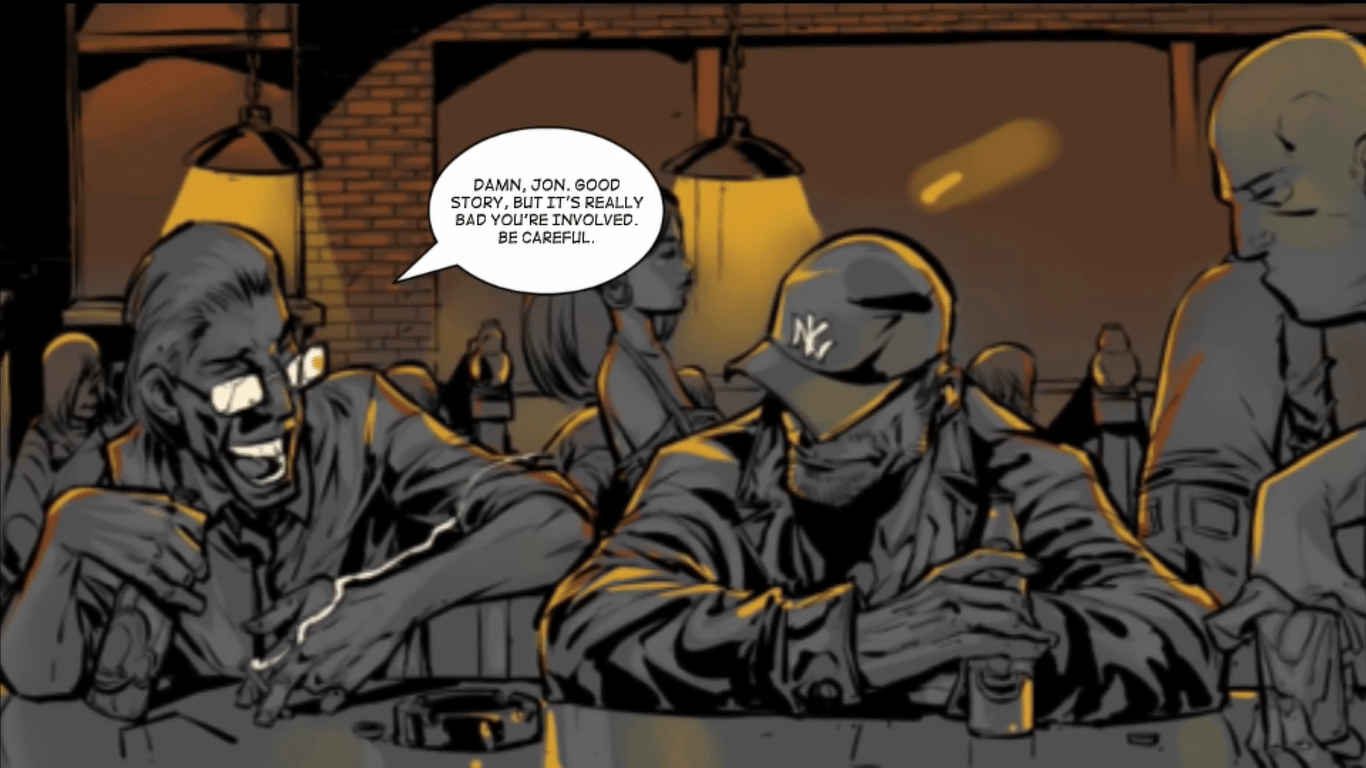
From the very first scene, Metropolis wears its inspirations proudly. This is Sin City through and through. Hard lines, heavy contrast, splashes of muted color against a monochrome world. It’s grime and cigarette smoke. It’s corrupt cops and backroom deals. It’s a film noir detective story… that just so happens to be a match-3 puzzle game. (Which is a sentence I never thought I'd say or write.)
Somehow, that combination works. Well, for the most part, that is.
Fresh Out of Prison, Back Into the Fire
At the center of Metropolis: Lux Obscura is Jon Lockhart, a man freshly released from prison and dropped right back into the corruption he never really escaped. He returns to a city that hasn’t changed. It’s still ruled by crime bosses, crooked officials, and people who see loyalty as currency. Old relationships resurface. New betrayals take shape. And almost immediately, Jon finds himself pulled into a web of violence, revenge, and power struggles that feel inevitable in a place like this.
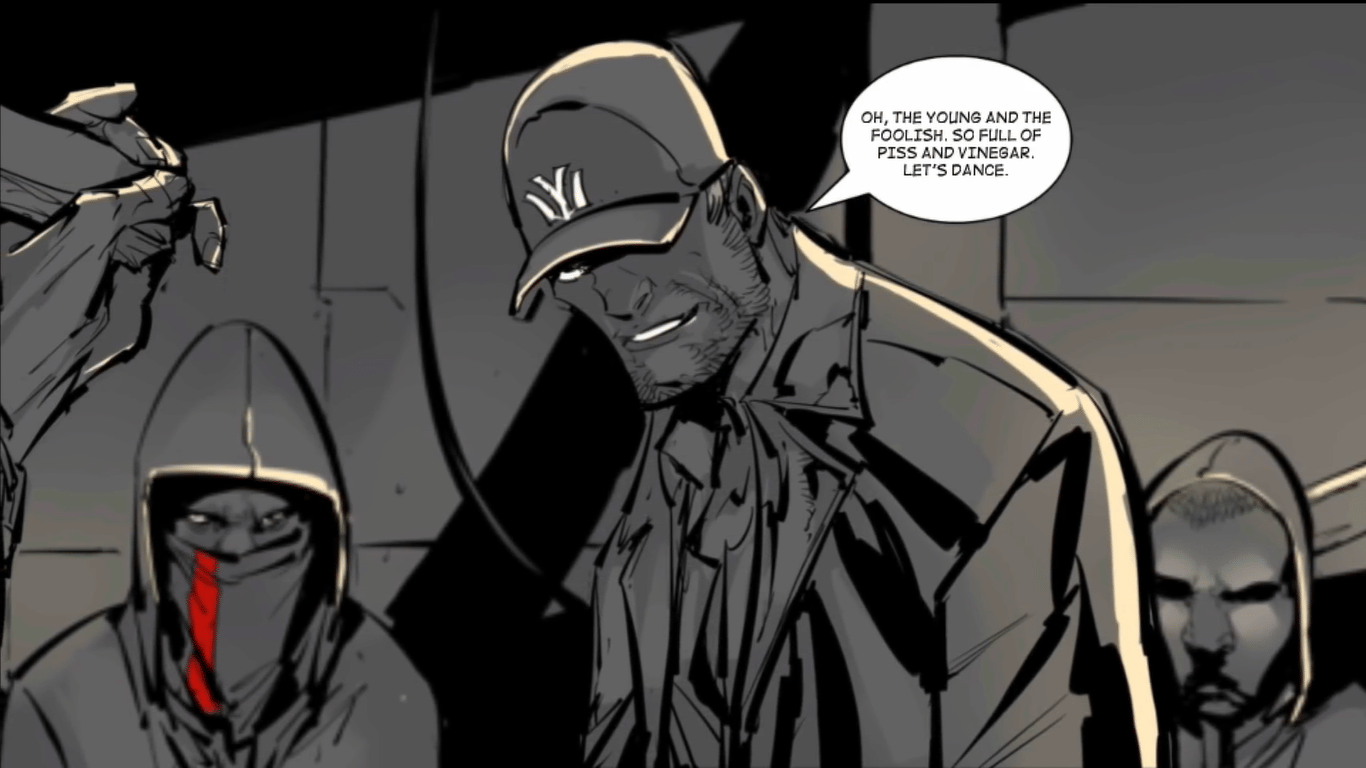
The story plays out like a gritty graphic novel. Conversations unfold in comic panels that are slightly animated. Choices appear at key moments, letting you decide how Jon responds in certain situations. These choices decide who he sides with, who he pushes away, and how deep he’s willing to sink to survive.
On paper, it’s a compelling setup. A man trying to navigate a city that’s already decided what he is. In execution, though, I sometimes struggled to follow the finer details. Character motivations aren’t always clear in a single playthrough, and some narrative threads only fully connect once you’ve seen every ending. And while my explanation of the story makes it sound like there's choices abound, there really isn't, and some choices aren't clear why you'd want to choose one over all other anyway. It’s all ambitious, layered, and intentionally murky. It can also leave you feeling like you’re missing pieces of the puzzle, though...
Adults Only in This Rotten Town
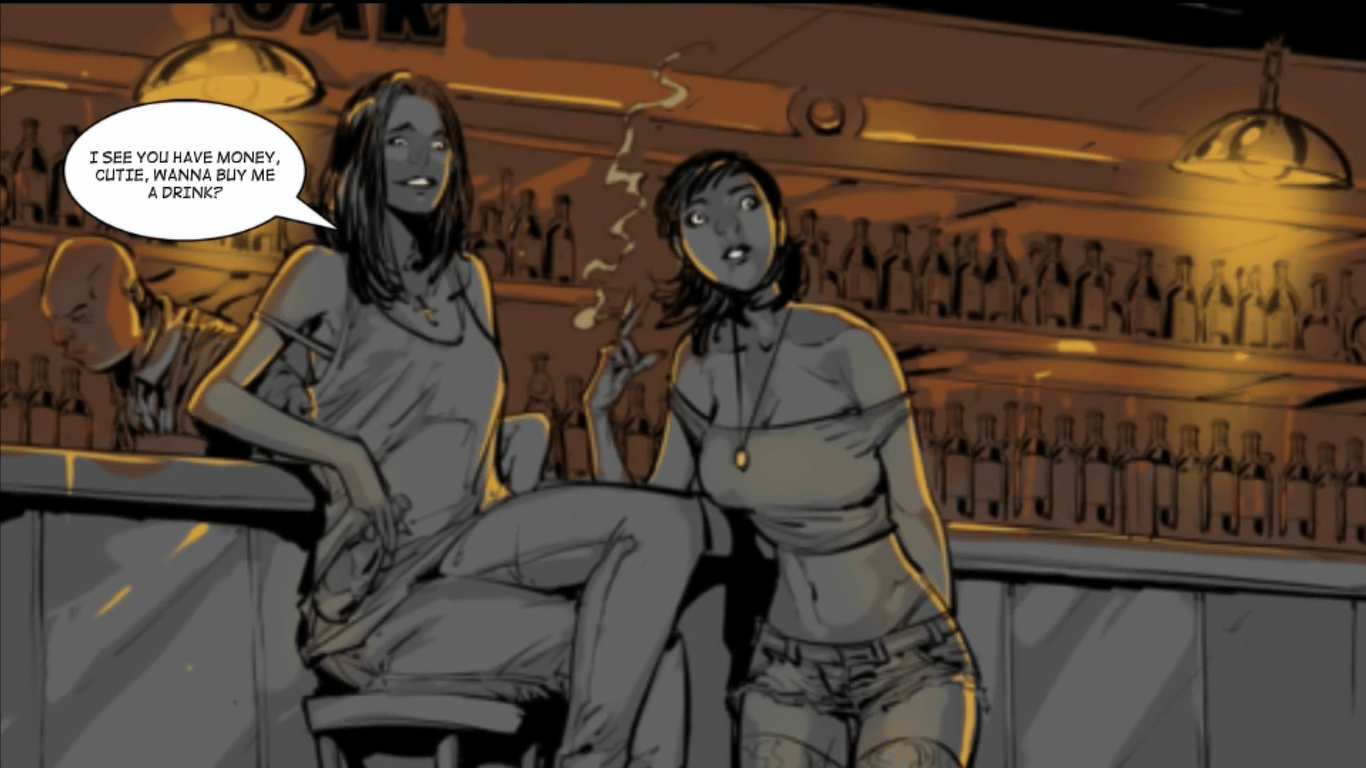
Allow me to be blunt. This is not a game for kids. This game contains nudity, sex depicted on screen, foul language, brutal violence... basically the whole package. It leans fully into its mature themes without apology. And really, I respect that. The game knows exactly what tone it wants and never backs down from it.
There is a bit of a problem, though. The problem isn’t that it’s all too dark. The problem is that the story underneath all that grit isn’t always strong enough to justify the weight it’s carrying.
There are four different endings to our story, and certain character motivations only really make sense once you’ve seen everything. By the time I rolled through multiple playthroughs to piece it all together, I wasn’t really invested anymore. I enjoyed the cutscenes between missions for what they were. It's worth noting they're fully voice acted, though the performances range from mediocre to cringe depending on the character.
Lux Obscura is stylish. It’s moody. It’s committed. But emotionally? It never quite hooked me.
When Fists Replace Gemstones
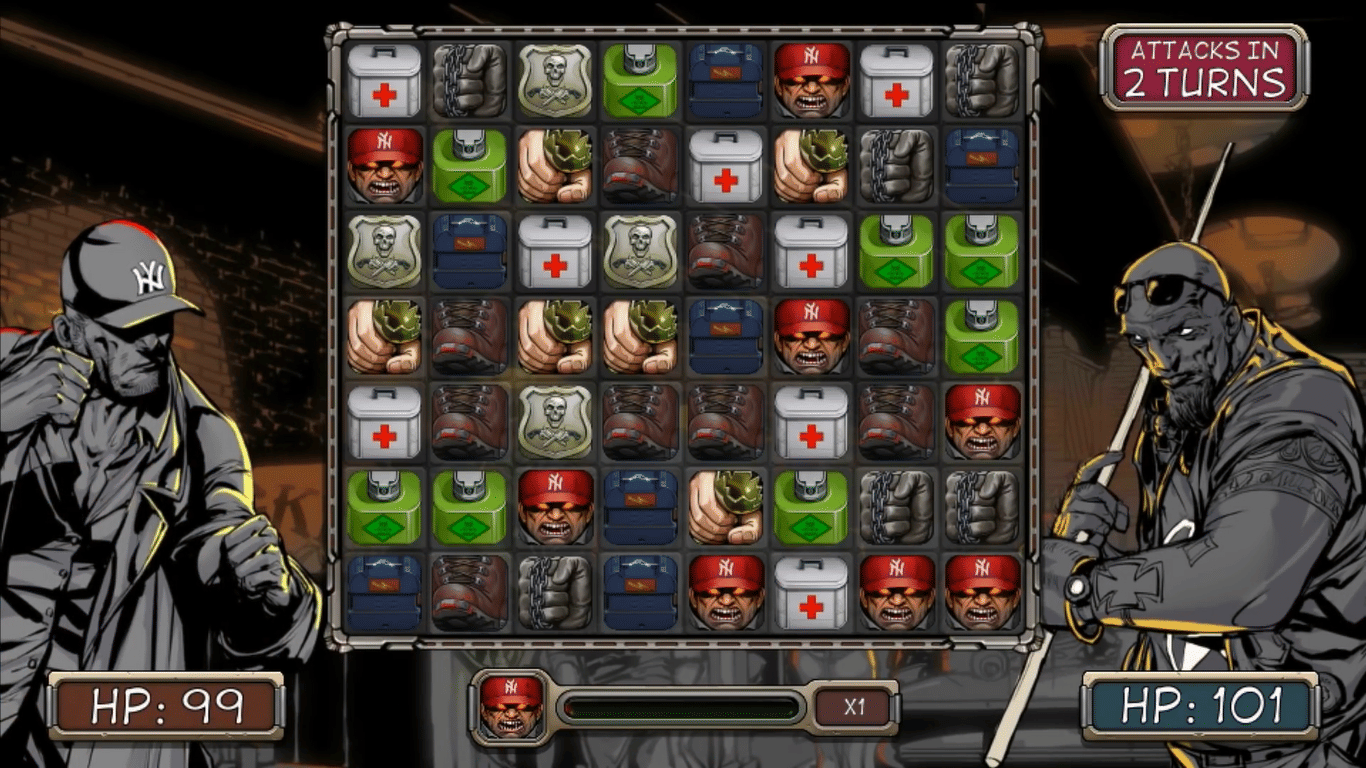
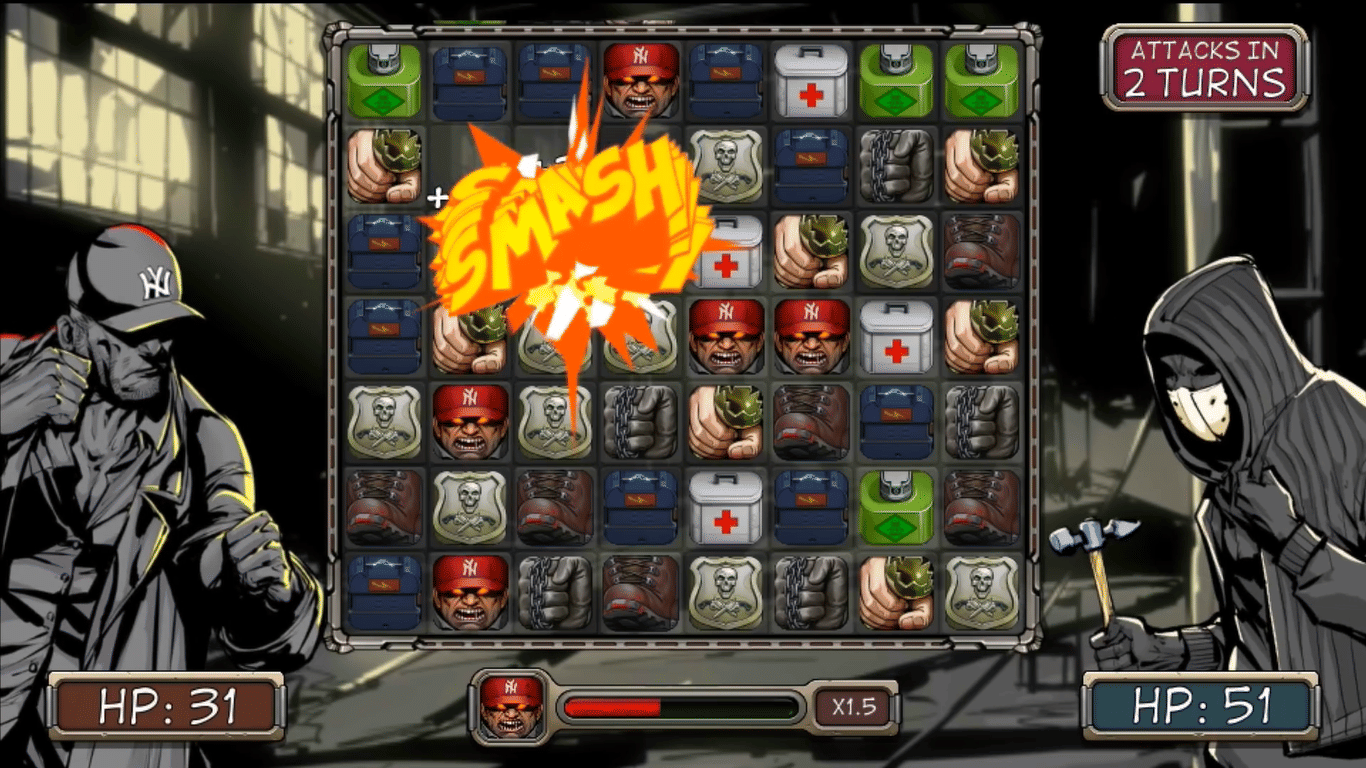
Now here’s where things get interesting. Underneath the trench coats and moral corruption lies a genuinely fun match-3 puzzle/combat system. When your main character throws down with someone in the story, the fight plays out on a puzzle board. Match three fists to punch your opponent. Match three boots to kick 'em in the face. Match health kits to restore your health. Match skulls and you hurt yourself. Build up your “anger” meter to increase damage output.
Both you and your opponent have a set number of hit points. When someone hits zero, the match ends. Win, and the story moves forward. Lose, and it’s back to the beginning of that fight.
And I’ll say this plainly: the gameplay is great. I found it very fun not just matching tiles to deal damage, but trying to think ahead to see where the tiles would land so I could potentially set up longer tile matches for bigger damage later.
Winning a battle lets you select a random perk to carry forward like health boosts, higher damage, anger upgrades, and other modifiers that subtly change your strategy. Depending on what you prioritize, different playthroughs can feel meaningfully different in combat. This is what kept me engaged, far more than the story did.
But it’s not perfect. There are moments where luck simply isn’t on your side. The tiles don’t fall the way you need them to. You can be playing smart, planning ahead, and still lose because the board doesn’t cooperate. It’s not a deal breaker, I mean randomness is part of match-3 design, but it can be frustrating. Still, when it all comes together and you see the word "Victory" on screen, you know you've earned it.
A City of Broken Dreams
Between missions, you’re shown a city map. You choose where to go next, and the order of those choices (along with a couple key dialogue decisions) influences which missions appear and which ending you receive. It’s a cool idea. It gives the illusion of agency. And to its credit, it does encourage multiple runs if you want to see everything.
But here’s where the game really loses me. There’s only a Story Mode. No Arcade Mode. No High Score Mode. No free play. And that, is a cryin' shame. Because I would have played this game a lot more if I didn’t have to push through lengthy story cutscenes just to get back to the puzzle combat. The core gameplay is strong enough to stand on its own, but it’s locked behind narrative framework that doesn’t quite compelle enough to warrant slogging through it just to enjoy the core gameplay hook.
For a match-3 puzzle game, that lack of replay-focused modes feels almost inexcusable.
The Smoke Clears and the Lights Fade
Conclusion. The soundtrack? Excellent. Moody, dark, perfectly aligned with the noir atmosphere. The comic book art style? A perfect match (pun absolutely intended) for the tone. The overall package? Unique. Bold. Unapologetic. There really is something unique and creative here.
It didn’t take long to see everything, either. After several hours and a few targeted playthroughs to secure all four endings (and yes, another Platinum Trophy for my pile once I knew what choices to make), I had experienced everything the city had to offer.
And that’s the heart of it. I love this game’s uniqueness. I love that someone decided to fuse a mature, hard-boiled noir tale with a match-3 combat system. I genuinely enjoyed my time walking those shadowed streets. But... there just isn’t enough here to keep me coming back.
For me, Metropolis: Lux Obscura was a one-and-done experience. A stylish experiment. A smoky back-alley story I visited once, appreciated for what it was… and then left behind like ashes from my cigar smoldering in the ashtray as I looked around, wondering how I'd even found myself here in the first place.
"Battle" from Metropolis: Lux Obscura (Ktulhu, 2018). Downloaded via KHInsider. All rights belong to Ktulhu.