

Wind-Up Mayhem
Mario vs. Donkey Kong on Nintendo Switch is a full remake of the 2004 Game Boy Advance title, reimagined with updated visuals, new content, and a modernized presentation. The game is a puzzle platformer that acts as a spiritual successor to the original arcade Donkey Kong, leaning heavily into precision movement and stage-based challenges.
The story setup is classic, Saturday-morning-cartoon Nintendo. Donkey Kong becomes obsessed with a line of wind-up Mini Mario toys, only to discover they’re sold out. Rather than waiting patiently like a normal primate, he storms the factory and steals a shipment of the toys. I mean, wouldn't you? They are ADORABLE. Mario gives chase, and what follows is a globe-trotting pursuit across themed worlds as he attempts to recover the Mini Marios and stop DK’s tantrum-fueled rampage.
It’s a simple, charming setup, and doesn’t pretend to be anything more than a light narrative excuse to string together dozens of puzzle rooms. There are cute cutscenes sprinkled throughout that give the rivalry some personality, but the story mostly exists to frame the action rather than drive it. At its core, the gameplay is where this game is at, and it revolves around guiding Mario through tightly designed stages where the goal is straightforward: grab a gold key and safely deliver it to a locked door. No sprawling open worlds. No RPG systems. Just self-contained puzzle chambers that demand you think before you leap. And really, that simplicity is exactly what drew me in.
I picked this game up while heading out on a work trip. I needed something portable, something I could jump into in short bursts between flights, in hotel rooms, or just for winding down. Mario vs. Donkey Kong turned out to be almost tailor-made for that scenario. Each level is bite-sized, self-contained, and structured like a miniature brain teaser. You’re rarely committing to more than a few minutes at a time, which makes it ideal for portable play.
Wind-Up Your Thinking Cap
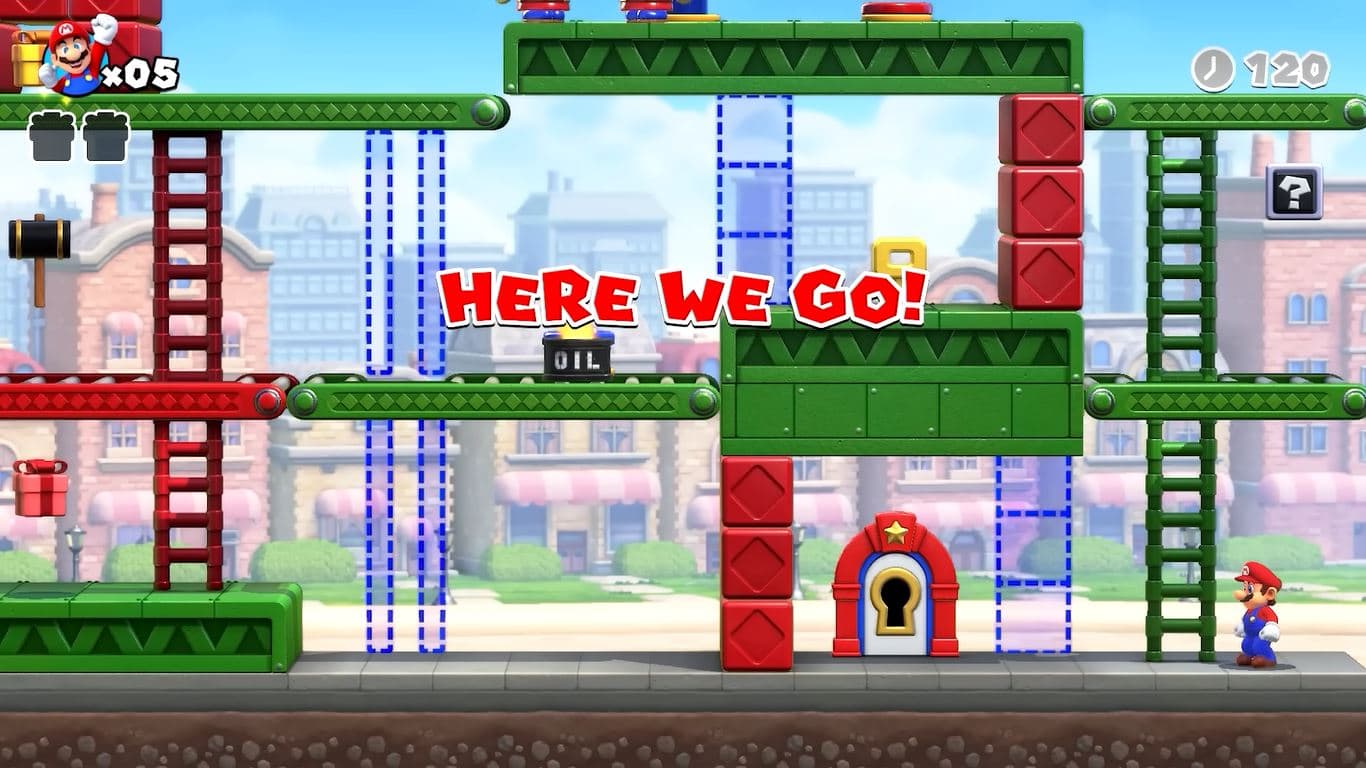
Each stage tasks you with guiding Mario through a puzzle-filled environment to find a gold key and bring it safely to a locked door. That's it. Sounds easy. And it is. For a while.
Levels are essentially mechanical playgrounds. You’ll flip switches, move girders, ride conveyor belts, dodge fire hazards, manipulate enemy patterns, and occasionally backtrack through areas you’ve already explored. The game often asks you to pause, survey the layout, and mentally map out your route before making your move and this is what I found most satisfying about the experience.
This design is where the game shines. Solving a puzzle, especially one that initially feels overwhelming, is deeply satisfying. There were multiple moments where I stared at the screen running through actions and routes in my mind, only to have that lightbulb moment a minute later. When everything clicks and you execute your plan perfectly, it genuinely feels rewarding.
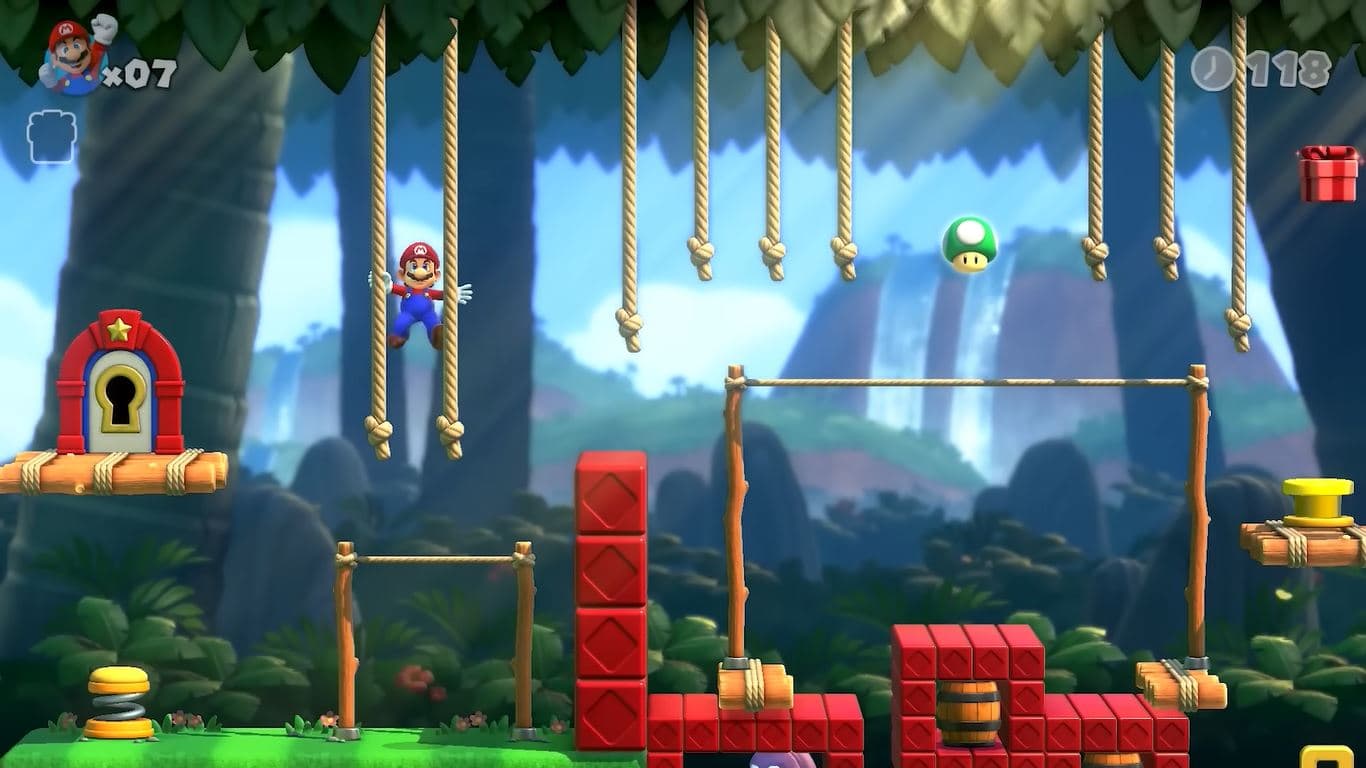
And to the game’s credit, Nintendo’s trademark polish is all over every level. Controls are responsive. Animations are smooth. The visual presentation is bright and clean, leaning into a toy-like aesthetic that fits the “Mini Mario” theme of the series. It feels modern, and while I've not personally played the Game Boy Advance version, I feel like it honored that legacy well.
Polish, Plastic, and a Little Jazz
Speaking of the game's polish, the overall presentation is exactly what you’d expect from a Nintendo published title this late in the Switch’s lifecycle: clean, colorful, and charming.
The music deserves a special mention. The jazzy, laid-back soundtrack caught me off guard in a good way. It’s mellow without being sleepy and upbeat without being distracting. It created a calming atmosphere that paired nicely with the puzzle-solving pace. Especially while traveling, that vibe worked in the game’s favor. It felt relaxing more often then not.
Animations are expressive, too. Mario’s acrobatics which include handstands, backflips, tightrope-like balancing acts all add personality to what could otherwise feel like sterile puzzle chambers. When you barely clear a spike trap or snag a key mid-fall, there’s a little bit of flair to it. It makes success feel theatrical in a way.
When the Wind-Up Snaps
Here’s where things get complicated.
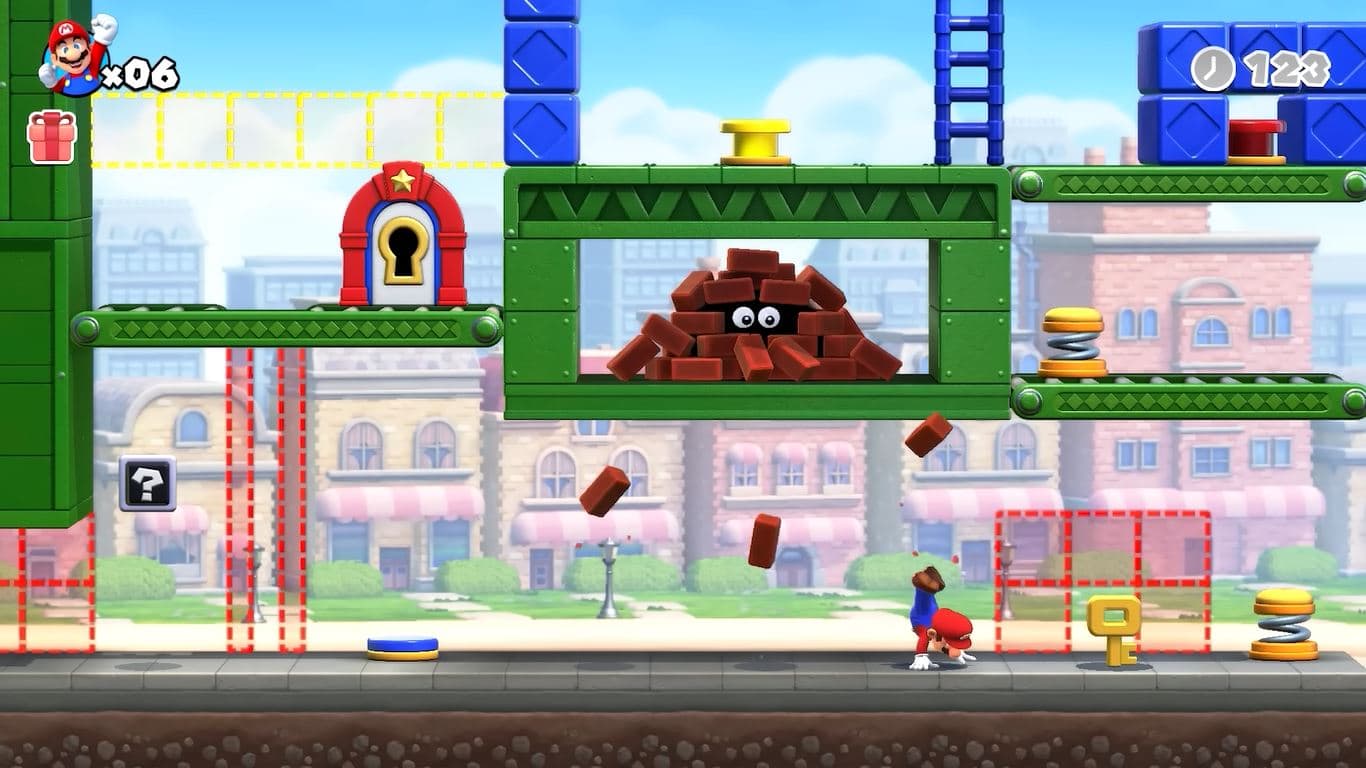
While most of the gameplay is built around puzzle-solving, platforming plays a much larger role than I initially expected. And it’s here where my frustrations started to mount.
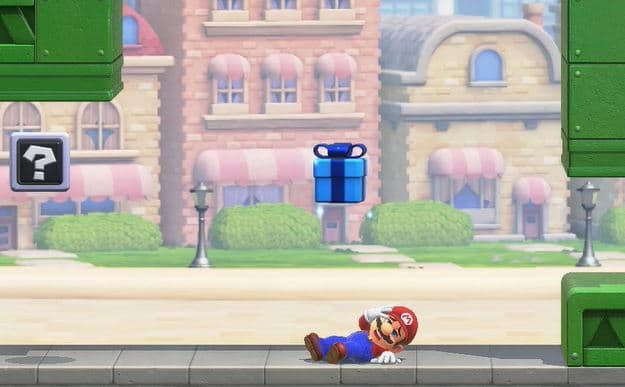
Mario vs. Donkey Kong operates on a one-hit system. Take a hit, lose a life, restart the section. That design choice adds tension, but it also amplifies mistakes, especially when those mistakes feel slightly imprecise. I found landing on enemies to defeat or pick them up required extremely specific positioning. More than once, I thought I had a clean stomp lined up, only to take damage instead.
Losing progress because of a pixel-perfect landing issue is the kind of frustration that can chip away at your patience. And while I understand that precision is part of the challenge, it sometimes felt less like I was solving puzzles and more like I was fighting the hit detection.
That said, when the platforming clicks, it really clicks. Pulling off a clean sequence by dodging hazards, flipping onto a narrow platform, grabbing the key, and escaping without taking a hit, feels fantastic. There’s a rhythm to it when you’re locked in. But for me, that rhythm didn’t always sustain itself.

From Clever to Cumbersome
Early on, I was hooked. The concept felt fresh (at least for my usual gaming diet), and I appreciated stepping outside my comfort zone. Puzzle games aren’t typically what hold my attention for long, but this one managed to grab me for a good stretch. About halfway through, though, the formula started to wear thin.
I don’t know if that’s a flaw in the game’s design or just a reflection of my own tastes. The core loop doesn’t evolve dramatically, it refines and escalates. For players who love intricate puzzle platformers, that steady ramp-up is probably a dream. For me, it began to feel repetitive. The trial-and-error approach, combined with the somewhat unforgiving platforming, slowly shifted the experience from satisfying to tedious.
Let me be clear, though. It’s not that the game suddenly becomes bad. It doesn’t. It remains well-crafted, mechanically sound, and thoughtfully designed. I simply stopped having fun.
And sometimes that’s the most honest critique of a game you can give.
At $49.99 USD, I struggled with the value proposition. As a polished remake of a GBA title, it feels expensive for what it offers, especially if you’re not fully invested in the genre. For puzzle-platforming fans, the content and additional modes might justify the price. For someone like me, who appreciates the craft but doesn’t live in this genre, it felt steep.
Mario vs. Donkey Kong is a solid game. It executes its ideas well. It carries that unmistakable Nintendo charm. It offers satisfying puzzle design and tight platforming for those willing to master it. But it also reinforced something about my own gaming preferences: I enjoy puzzle games in moderation. I like dipping my toes in, especially when I'm looking for a game to play in short bursts, but I don’t always want to swim in them for 10+ hours.
I’m glad I played Mario vs Donkey Kong. I respect what it does. I even had stretches where I really enjoyed it. But by the end, I was ready to move on.
"Mario Toy Company B" from Mario vs. Donkey Kong (Nintendo, 2024). Downloaded via KHInsider. All rights belong to Nintendo.